As a sweetener: Dextrose monohydrate is a commonly used sweetener in the food industry. It is often used in baked goods, confectionery, and beverages, as well as in some processed foods.
As a source of energy: Dextrose monohydrate is a source of glucose, which is a primary source of energy for the body.
In pharmaceuticals: Dextrose monohydrate is used in some pharmaceuticals as a filler or excipient to help with the manufacturing and processing of medications.
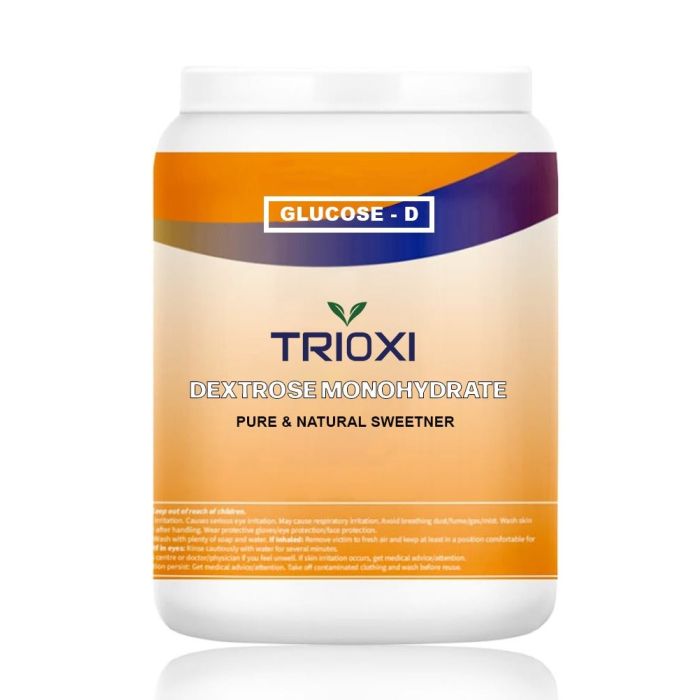
Dextrose monohydrate is a type of sugar that is also known as glucose or grape sugar. It is a simple sugar that is chemically identical to sugar, or the sugar that is found naturally in our bodies. Dextrose monohydrate is typically made from corn starch through a process of enzymatic hydrolysis and purification. The corn starch is treated with enzymes that break down the long chains of glucose molecules into shorter chains, resulting in a syrup that is mostly glucose. This syrup is then further purified and crystallized to form dextrose monohydrate. Dextrose monohydrate is sometimes also called corn sugar, grape sugar, or d-glucose. Regulatory status: In many countries, including the United States and Europe, dextrose monohydrate is considered a generally recognized as safe (GRAS) food additive. It is also approved for use in pharmaceuticals by the United States Pharmacopeia (USP) and the European Pharmacopoeia (Ph. Eur.).
As a sweetener: Dextrose monohydrate is a commonly used sweetener in the food industry. It is often used in baked goods, confectionery, and beverages, as well as in some processed foods.
As a source of energy: Dextrose monohydrate is a source of glucose, which is a primary source of energy for the body.
In pharmaceuticals: Dextrose monohydrate is used in some pharmaceuticals as a filler or excipient to help with the manufacturing and processing of medications.
In industrial applications: Dextrose monohydrate is used in some industrial applications, such as in the production of bioplastics and as a fermentation substrate.