
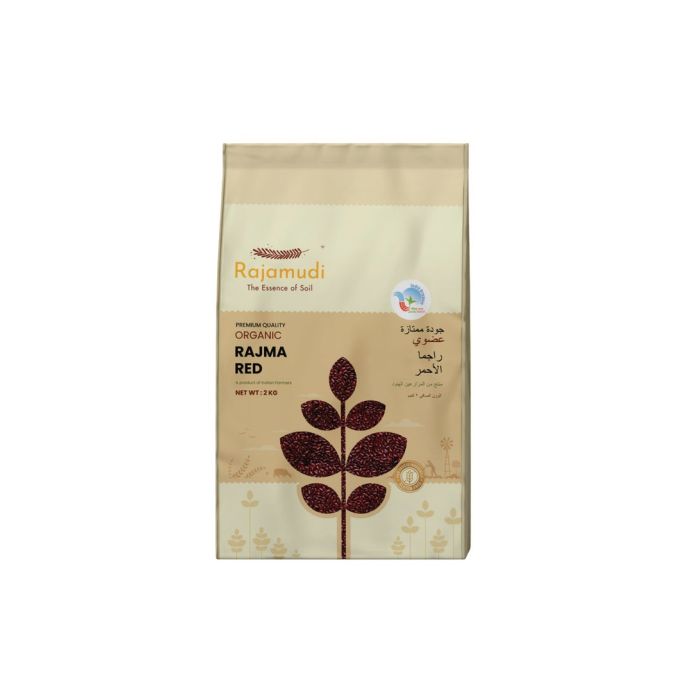
Organic Red Kidney Beans (Rajma) 2 KG – High Protein, Iron-Rich, The Heart of Rajma Chawal
- The Highest Iron of Any Indian Dal or Bean — 8.2mg Per 100g – Red kidney beans deliver 8.2mg of iron per 100g raw — exceeding masoor dal and urad dal, making rajma the single highest iron source among commonly consumed Indian pulses. Iron deficiency affects over 50% of Indian women, and rajma consumed with Vitamin C sources — the traditional tomato-rich gravy with a squeeze of lemon — significantly enhances non-haem iron absorption. For vegetarian and vegan families, no other pulse does more for iron nutrition than a well-made bowl of rajma
- Extraordinary Fibre for Gut Health & Heart Protection – Red kidney beans deliver 25 grams of dietary fibre per 100g raw — among the highest fibre content of any food commonly consumed in India. This fibre is a mix of soluble (lowers cholesterol, feeds gut bacteria) and insoluble (bowel regularity, prevents constipation). Regular rajma consumption is one of the most effective dietary strategies for gut microbiome diversity and cardiovascular cholesterol management. Every bowl of Rajamudi Organics Rajma is a genuine investment in your long-term heart and gut health.
- Certified Organic — Free from All Chemicals, Truly Farm-to-Table – Grown on NPOP-certified organic farms completely free from synthetic pesticides, herbicides, chemical fertilisers, and GMOs. Certified by Aditi Organic Certifications Pvt. Ltd. (Accreditation No. NPOP/NAB/0017). Rajma is an excellent source of plant-based protein, dietary fibre, iron, and essential vitamins including B-complex — and with Rajamudi Organics' organic certification, you get all of this nutritional richness without a trace of chemical residues. Clean, traceable, and genuinely grown the right way.
Rajamudi Organics Certified Organic Red Kidney Beans (Rajma) — the most celebrated bean in Indian cuisine, organically grown, and carrying the unmistakable warmth of the dish that every North Indian family holds closest to their heart.
The Bean That Means Home
Ask any North Indian about their most beloved meal — the one that makes them close their eyes and smile — and nine times out of ten, the answer is Rajma Chawal. Not a restaurant meal. Not a celebration dish. Just a pot of deep red rajma, slow-simmered in a rich onion-tomato masala until the beans are creamy and the gravy coats every grain of rice. The kind of meal that grandmothers made on Sunday afternoons, that mothers still make when children come home, and that no restaurant in the world has ever quite managed to replicate.
Rajma, commonly known as red kidney beans, is particularly popular in North Indian cuisine — these vibrant, kidney-shaped beans are prized for their rich, earthy flavour and hearty texture. Traditionally, rajma is soaked overnight and slow-cooked with a blend of aromatic spices, onions, and tomatoes to create the beloved Rajma Masala, often served with steamed rice.
Rajma is native to the Americas — it was brought to India from the New World by Portuguese traders in the 16th and 17th century, yet it has woven itself so completely into the fabric of Indian cooking that today it is impossible to imagine North Indian cuisine without it. From the dhabas of Punjab to the home kitchens of Delhi, Himachal, and beyond — rajma is not an ingredient. It is an emotion.
For Indian expat families in the UAE, a pack of rajma in the pantry is more than groceries. It is the promise of a Sunday that feels like home, wherever in the world you are.
Why Organic Rajma Is Worth Choosing
Red kidney beans are a crop that absorbs what it is grown in — the quality of the soil, the presence or absence of chemicals, the integrity of the farming practices. Rajamudi Organics sources its rajma exclusively from NPOP-certified organic farms where no synthetic pesticides, herbicides, or chemical fertilisers are used at any stage of cultivation.
Every batch is independently verified by Aditi Organic Certifications Pvt. Ltd. (Accreditation No. NPOP/NAB/0017), giving you complete traceability from farm to pack. When you open a bag of Rajamudi Organics Rajma, you get beans that are exactly what they appear to be — deep red, naturally dried, uncoated, and genuinely organic. No artificial colouring. No polishing agents. No preservatives. Just the bean, as nature grew it.
The Nutritional Story — Among the Most Impressive of All Indian Pulses
Red kidney beans are not just a satisfying meal — they are one of the most nutritionally dense foods in the Indian pantry. Here is what makes them truly extraordinary:
Iron — The Highest of Any Indian Dal: At 8.2mg per 100g raw, rajma's iron content exceeds masoor dal and urad dal — making it the highest iron source among commonly consumed Indian dals and beans. Iron deficiency affects over 50% of Indian women. The traditional tomato-rich rajma gravy is not just culinary tradition — the Vitamin C in tomatoes significantly enhances non-haem iron absorption, making the classic Rajma Masala preparation one of the most iron-bioavailable meals in Indian cooking. Every bowl of rajma is a meaningful contribution to iron nutrition — particularly for women, growing children, and those managing anaemia.
Extraordinary Fibre — Gut & Heart Health: 25 grams of dietary fibre per 100g raw is extraordinary — among the highest fibre content of any food commonly consumed in India. This fibre is a mix of soluble (lowers cholesterol, feeds gut bacteria) and insoluble (bowel regularity, prevents constipation). Regular rajma consumption is one of the most effective dietary strategies for gut microbiome diversity and cardiovascular cholesterol management. NutriScan
Potassium — Heart Protection: At 1406mg of potassium per 100g raw, rajma is one of the highest potassium foods in the Indian diet — critical for blood pressure regulation, heart muscle function, and counterbalancing the effects of sodium. For the UAE Indian population — where cardiovascular concerns are significant — regular rajma consumption is a genuinely heart-protective dietary habit.
Plant Protein for the Whole Family: Rajma provides about 15 grams of protein per cooked cup — an excellent source of plant-based protein that supports muscle growth, tissue repair, and sustained energy throughout the day. Combined with rice — as in the traditional Rajma Chawal — the protein complementarity of beans and rice provides a complete amino acid profile, making this humble meal one of the most nutritionally complete in Indian cooking.
Blood Sugar Management: Having a low glycemic index, kidney bean consumption maintains blood sugar levels — red beans have an excellent glucose-lowering potential, making them the main ingredient in functional low-GI foods. The combination of high fibre, resistant starch, and complex carbohydrates means rajma releases energy slowly and steadily, without the blood sugar spikes associated with refined foods. Noon
Weight Management: When consumed in moderation, rajma is a great food source for weight loss — its high protein content makes you feel full for a longer period of time, reducing overall caloric intake throughout the day. A bowl of rajma chawal for Sunday lunch keeps hunger at bay well into the evening — deeply satisfying in a way that few other meals can match.
The Art of Perfect Rajma Masala
Great rajma is not rushed. It rewards patience, good ingredients, and the understanding that some things simply cannot be hurried. Here is how to make it properly:
Soak the rajma overnight in plenty of cold water — a full 8 to 12 hours. Drain and rinse thoroughly. Pressure cook with fresh water and a pinch of salt for 6 to 8 whistles until the beans are completely tender and yield easily when pressed. A perfectly cooked rajma bean should be creamy all the way through, never chalky or firm at the centre.
For the masala: heat generous ghee or oil, add whole cumin until it sputters, then finely chopped onions until deeply golden — do not rush this step, golden onions are the foundation of great rajma. Add ginger-garlic paste, cook until raw smell disappears. Add pureed tomatoes, turmeric, coriander powder, cumin powder, and red chilli powder — cook the masala until the oil separates. Add the cooked rajma with its cooking liquid, and simmer uncovered on low heat for 20 to 30 minutes. The beans will break down slightly at the edges, thickening the gravy naturally. Finish with garam masala, fresh coriander, and a knob of butter.
Serve over fluffy white basmati rice. That is Rajma Chawal. That is home.
Beyond Rajma Chawal — The Versatility of Kidney Beans
While Rajma Chawal is the undisputed star, red kidney beans are remarkably versatile across cuisines:
- Rajma Masala — The classic North Indian preparation with rice, the undisputed Sunday comfort meal
- Rajma Galouti — Slow-cooked, melt-in-the-mouth kebabs made from mashed rajma and spices
- Mexican Inspiration — Kidney beans are the star of chilli con carne, bean burritos, and loaded tacos — a natural cross-cultural bridge for UAE families who enjoy global cuisine
- Bean Salads — Boiled rajma tossed with cucumber, tomato, red onion, lemon, and chaat masala — a high-protein, no-cook salad
- Soups & Stews — Rajma adds body, protein, and depth to vegetable soups and minestrone-style preparations
- Mashed Bean Dip — Boiled rajma mashed with garlic, lemon, and olive oil makes an outstanding dip for bread and crackers
- Rajma Rice Bowls — A quick weeknight meal of spiced rajma over brown rice with avocado and greens
- The Highest Iron of Any Indian Dal or Bean — 8.2mg Per 100g – Red kidney beans deliver 8.2mg of iron per 100g raw — exceeding masoor dal and urad dal, making rajma the single highest iron source among commonly consumed Indian pulses. Iron deficiency affects over 50% of Indian women, and rajma consumed with Vitamin C sources — the traditional tomato-rich gravy with a squeeze of lemon — significantly enhances non-haem iron absorption. For vegetarian and vegan families, no other pulse does more for iron nutrition than a well-made bowl of rajma
- Extraordinary Fibre for Gut Health & Heart Protection – Red kidney beans deliver 25 grams of dietary fibre per 100g raw — among the highest fibre content of any food commonly consumed in India. This fibre is a mix of soluble (lowers cholesterol, feeds gut bacteria) and insoluble (bowel regularity, prevents constipation). Regular rajma consumption is one of the most effective dietary strategies for gut microbiome diversity and cardiovascular cholesterol management. Every bowl of Rajamudi Organics Rajma is a genuine investment in your long-term heart and gut health.
- Certified Organic — Free from All Chemicals, Truly Farm-to-Table – Grown on NPOP-certified organic farms completely free from synthetic pesticides, herbicides, chemical fertilisers, and GMOs. Certified by Aditi Organic Certifications Pvt. Ltd. (Accreditation No. NPOP/NAB/0017). Rajma is an excellent source of plant-based protein, dietary fibre, iron, and essential vitamins including B-complex — and with Rajamudi Organics' organic certification, you get all of this nutritional richness without a trace of chemical residues. Clean, traceable, and genuinely grown the right way.
- Outstanding Plant Protein & Low Glycemic Index for Weight & Blood Sugar Management – Rajma beans provide about 15 grams of protein per cooked cup — an excellent source of plant-based protein supporting muscle growth, tissue repair, and sustained energy. Having a low glycemic index, kidney bean consumption maintains blood sugar levels — red beans have an excellent glucose-lowering potential, serving as the main ingredient in functional low-GI foods. Deeply filling, blood-sugar friendly, and genuinely nourishing — rajma is the rare food that satisfies on every level.
- The Comfort Food That Connects Every North Indian Expat to Home – Rajma Chawal is one of the best dishes in the world — red kidney beans in a flavorful onion and tomato-based gravy, completed by a serving of fluffy steamed rice. It is significant to Indian cuisine as a symbol of warmth and familial bonds, a cherished comfort food in Indian homes and an enduring favourite that resonates with love. For the Indian expat family in the UAE, a pot of simmering rajma masala is not just dinner — it is home.
| Product Weight | 2 KG |
|---|---|
| Size | 2 kg |
| Specialty | No Preservatives |
| Pack Quantity | Single |
| Diet | Organic |
| Shelf Life | 1 year |
| Form | Block |
| Cuisine | Indian |
| Certification | FSSAI |
| Item Count | 2 KG |
| Nutritional Facts | NUTRITION FACTS Serving Size: 1/4 Cup (47g) Servings Per Container: 42 Calories per Serving: 174 Total Fat: 0.7g (1.5% DV) Saturated Fat: 0.13g (0.3% DV) Trans Fat: 0.0g (0.0% DV) Cholesterol: less than 0.0mg (0.0% DV) Sodium: 0.0mg (0.0% DV) Total Carbohydrates: 26.7g (60.4% DV) Dietary Fiber: 3.4g (7.6% DV) Total Sugars: 1.7g (3.9% DV) Includes Added Sugars: 0g (0.0% DV) Protein: 11.6g (26.1% DV) Vitamin D: 0.0mg (0.0% DV) Calcium: 0mg (0.0% DV) Iron: 0.0mg (0.0% DV) Potassium: 74mg (0.2% DV) |
| Preparation Information | COOKING INSTRUCTIONS Regular Cooking (Stovetop) Step 1: Rinse the beans thoroughly and soak them in water overnight or for at least 8 hours Step 2: Drain and rinse the soaked beans Step 3: Cook the beans in fresh water using a 1:3 bean-to-water ratio. Boil until tender, which usually takes about 45 to 60 minutes. A pressure cooker can be used to reduce cooking time Step 4: Perfect for traditional Indian dishes like Rajma, or in salads, soups, and stews Storage: Store under cool and dry conditions. Transfer contents to an airtight container after opening. |
| Product Ingredients | Organic Red Kidney Beans |
| Storage Requirements | Ambient |
| What's In The Box | Organic Red Kidney Beans |
| Is Dummy | No |
|---|---|
| Brand | Rajamudi |
| Tags | Fulfilled by noon, Free Delivery, Buy 5 get 5% cashback |
| Seller | Rajamudi |
| Highlights | 2kg | 2.45/100g |